

When Consistent Practice Meets the Moment
And the rubber literally meets the road

Back in the early ‘90s, when Tricycle magazine first came out and I was a new, eager Buddhist practitioner, there was a little cartoon that I found funny and clever. One person says to her friend, “Why are you so grumpy? I thought you were a meditator!” And the friend says, “You should have heard me before I started meditating!”
This cartoon taught me a valuable lesson about meditation practice. It might not get rid of all your undesirable ways, but it can lessen their frequency and maybe even give rise to self-awareness.
Isn’t this what we all want to know? Is my meditation practice helping me act better, feel better, be better?
In my last post I wrote about the value of doubt. It’s absolutely worthwhile to ask yourself if your practice is working, because if you don’t notice any benefits, it is hard to keep going just on faith.
So how can you tell if your practice is working?
Like the cartoon meditator, many people have told me they notice changes in their thoughts, speech and actions. They report little things such as, “I’m nicer to waiters now,” or, “I’m more patient.” These things really aren’t so little, and once you recognize them they give you the motivation to continue practicing. It doesn’t take much for these small shifts to boost your confidence—in your practice and in yourself.
But it does take one big thing: consistency. Right away I want to add a caveat to the word consistency, because these days there are way too many people pushing the 5 a.m. club, which tells you that unless you get up every.single.day at the crack of dawn and sit quietly for 5 minutes, do breath work for 5 minutes, drink 2 glasses of water, go for a solitary silent walk, etc. etc., you will never get out of your unsatisfying ruts.
If this works for you, wonderful! But if it doesn’t, don’t worry. There are a lot of ways to be consistent.
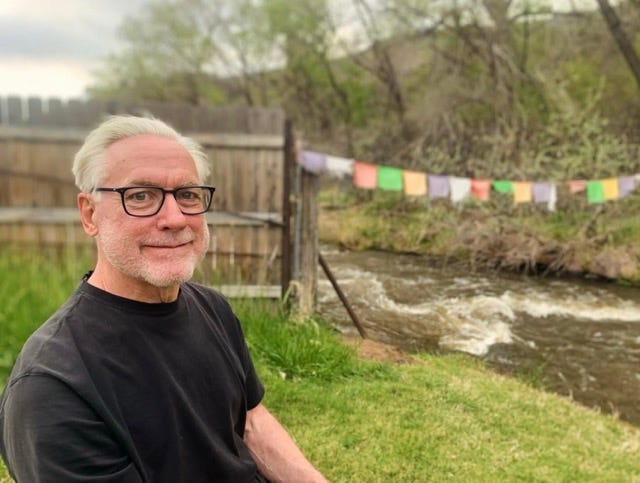
Let me introduce you to my husband, Brad. Brad read one of my books after we met and began meditating on his own. Our first date was a dharma talk with Enkyo Roshi and Tenzin Palmo. I wanted him to meet my dharma mothers.
Once we got together, he began attending retreats. He has gone to Zen sesshins, several Tibetan Buddhist retreats, and every single meditation retreat I have taught in the last 13 years, which is a lot if you include online retreats. Each retreat feeds him in a certain way and he chews on his experiences and insights until the next retreat. He also reads a lot of dharma books.
I can’t say he has become nicer to waiters because he is already naturally kind and thoughtful. But I don’t think he would mind if I said he has become more patient.
And then yesterday we had a big incident that showed me a profound benefit that Brad has received from his consistent practice.
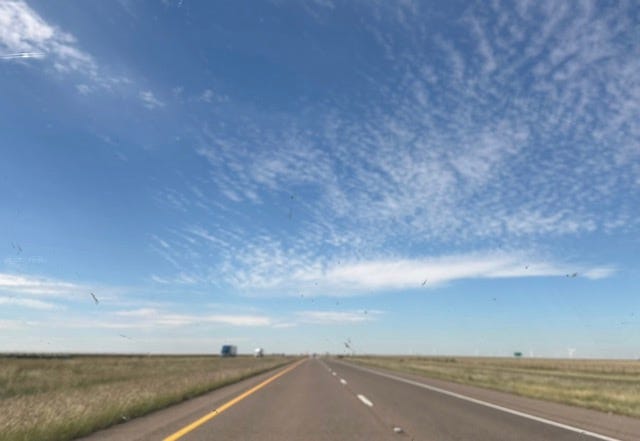
We were driving home from Oklahoma City to Santa Fe. It’s an eight hour drive and particularly along the Texas panhandle, there are very few other vehicles. After many empty miles of road, Brad said, “There’s something you don’t see often. A gigantic RV towing a cute little sports car.” I said, “Uh huh,” and went back into my nap.
Suddenly I was jolted awake by Brad slamming on the brakes and yanking the wheel hard to the left. The RV was rapidly pushing into our lane which caused the sportscar it was towing to swerve in an arc aimed directly at the front of our car.
Brad cranked the wheel more but there was no shoulder and nowhere left to go except into the metal lane divider. He pumped the brakes as the sports car veered within inches of us and it was all happening at 80 miles per hour.
It was very possible that things could have gone a different way, but Brad never lost his focus; was never overtaken by fear or anger or panic. He rode the situation second by second, monitoring every minuscule change and responding in the right ways that saved us from a devastating highway accident.
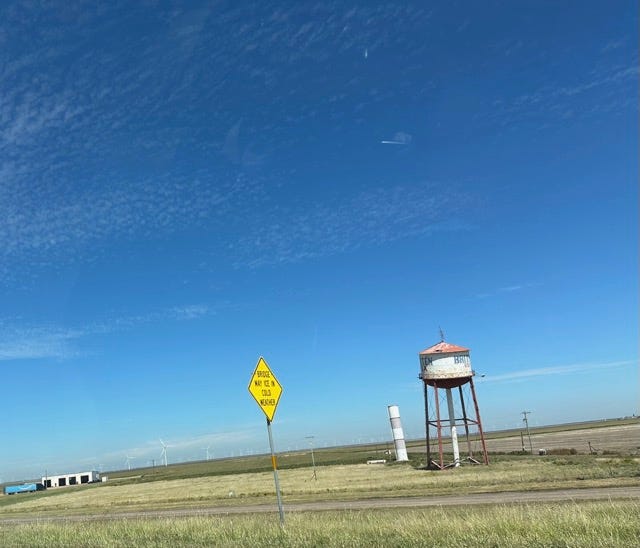
This frightening event must have lasted 30 seconds and then it was over. The RV/sportscar barely slipped by us and then back into the right lane. We drove past it and on toward New Mexico. Brad wasn’t mad or panting or holding on to the drama of it. Of course, we talked about what happened and processed it for a couple minutes, but that’s all. It was done.
I looked at Brad in awe. My lovely husband, who takes care of many things in our life and is most often somewhat soft spoken, looked calm and powerful to me. I said, “Brad, you really held your mind. Thank you for that masterful piece of driving. You saved us with your strong mind.”
That strong mind is the result of his years of consistent meditation practice. Because of that he was able to hold his mind in the face of a life-threatening situation. This is exactly why we meditate. To develop your mind, to strengthen and stabilize your mind, so that you can call it up as a resource when you need it, even on a second’s notice.
The combination of shamatha—precise concentration—and vipassana—clear seeing and understanding—is what Brad manifested in that moment, because he has been practicing it for years.
Consistency doesn’t require you to do the same thing every day at the same time. One dictionary definition of consistency is, “steadfast adherence to the same principles, course, form.” But the thesaurus offers synonyms for consistency such as firmness, flexibility, suppleness and solidity. Your practice has to fit your life and that is how it will shift your life.
Consistency refers to both your commitment to practicing, questioning it without quitting, and observing the results over time. It also refers to the texture of your mind and heart. Can you hold steady and still be spacious and loving? Can you be nimble and meet situations in the moment with clarity and stability? Can you hold that space for others, too?

This Substack is called Drip, Drip, Drip the Bucket Fills, which is what I remember Gelek Rimpoche saying. He was paraphrasing a quote from Buddha which comes from The Dhammapada:
“Drop by drop is the water pot filled.
Likewise, the wise man, gathering it little by little, fills himself with good.”
Here are some ways for you to become consistent with practice and study:
Attend retreats. I lead 4 online retreats annually and there are still two more in 2025 PLUS an in-person retreat in October. See below for details and feel free to write me with any questions.
Take some private meditation lessons. There is much more to meditating than the basic instructions. If you are feeling stuck or bored or frustrated in your practice, working one-on-one is a good way to reconnect to your practice and learn more about it and yourself. At this time, I have 2 openings for private students.
Read a dharma book. A great one to start with is How to Meditate by Pema Chodron.
Join a sangha. A sangha is a community of other meditators and is considered one of the three jewels or methods for developing your practice. My sangha, Lifting the Gaze, meets 3x monthly for dharma talks, discussions, connections and group meditation practice. All are welcome, no experience necessary.
If you liked this article, please scroll down to the bottom and “like” or comment. Substack tells me it helps more people see this post when that happens. Thanks!
If you found this article valuable, please feel free to share it with your friends!
Practice Opportunities

This retreat will be all about meditation practice. How does the practice of shamatha, mindfulness meditation, actually impact your life? What is the technique and how does it relate to my thoughts and actions off the cushion? A daily dharma talk, short discussion and practice will help us integrate meditation into the wholeness of our life.
Great for beginning meditators or anybody who wants a refresher.
September 29 - October 3
30 min/day
12:15-12:45pm ET
December 1 - December 5
15 min/day
12:15-12:30pm ET
Paid subscribers, and Moon and Stars sangha members: You can redeem your $40 discount pricing using the button at the bottom of each retreat’s registration page.
Also, you can purchase both retreats (September & December) for $80:
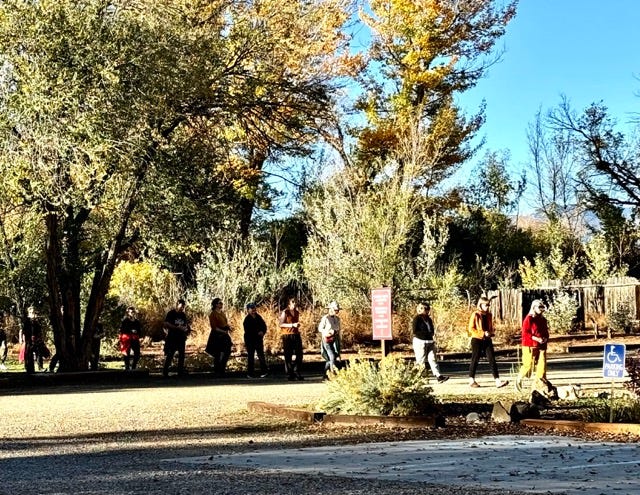
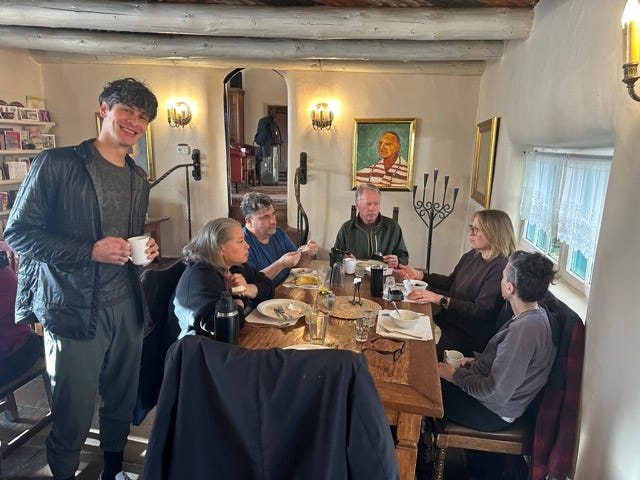
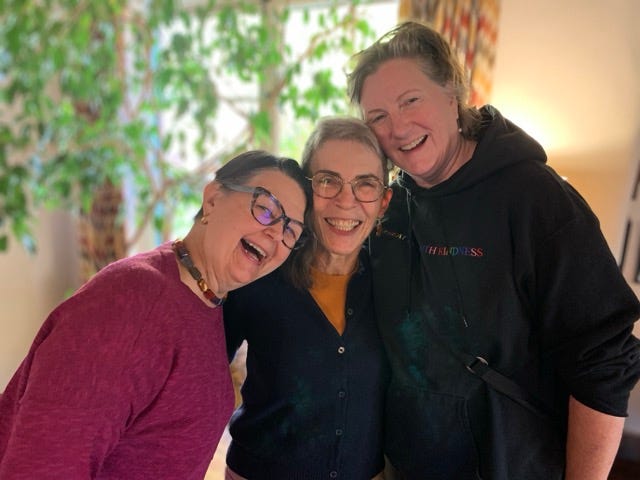
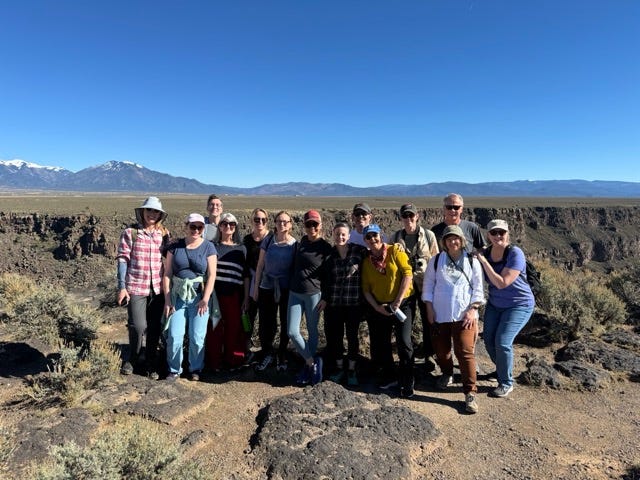
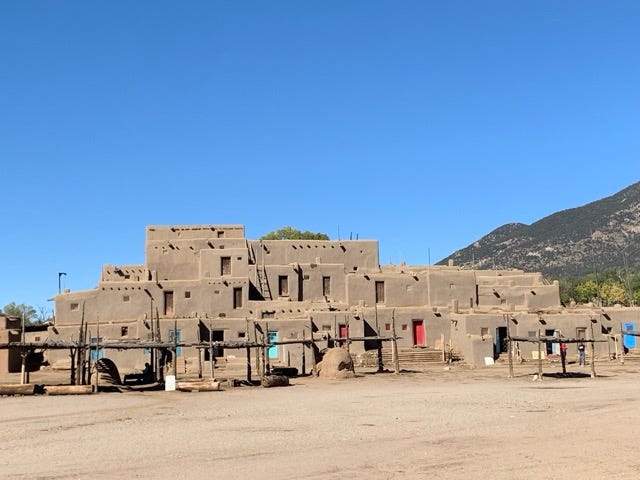
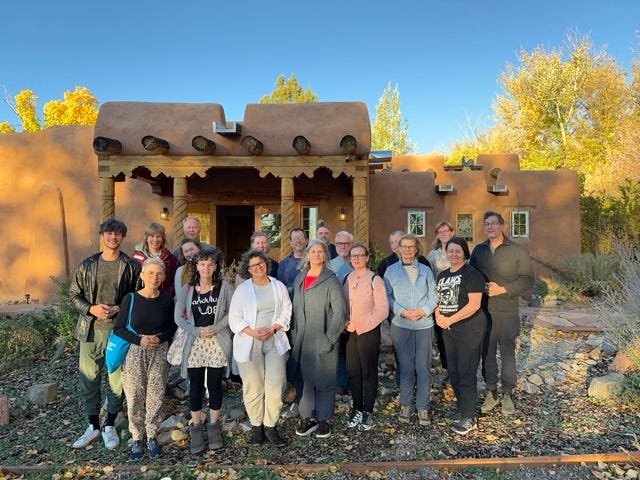
Lifting the Gaze Retreat in Taos, New Mexico!
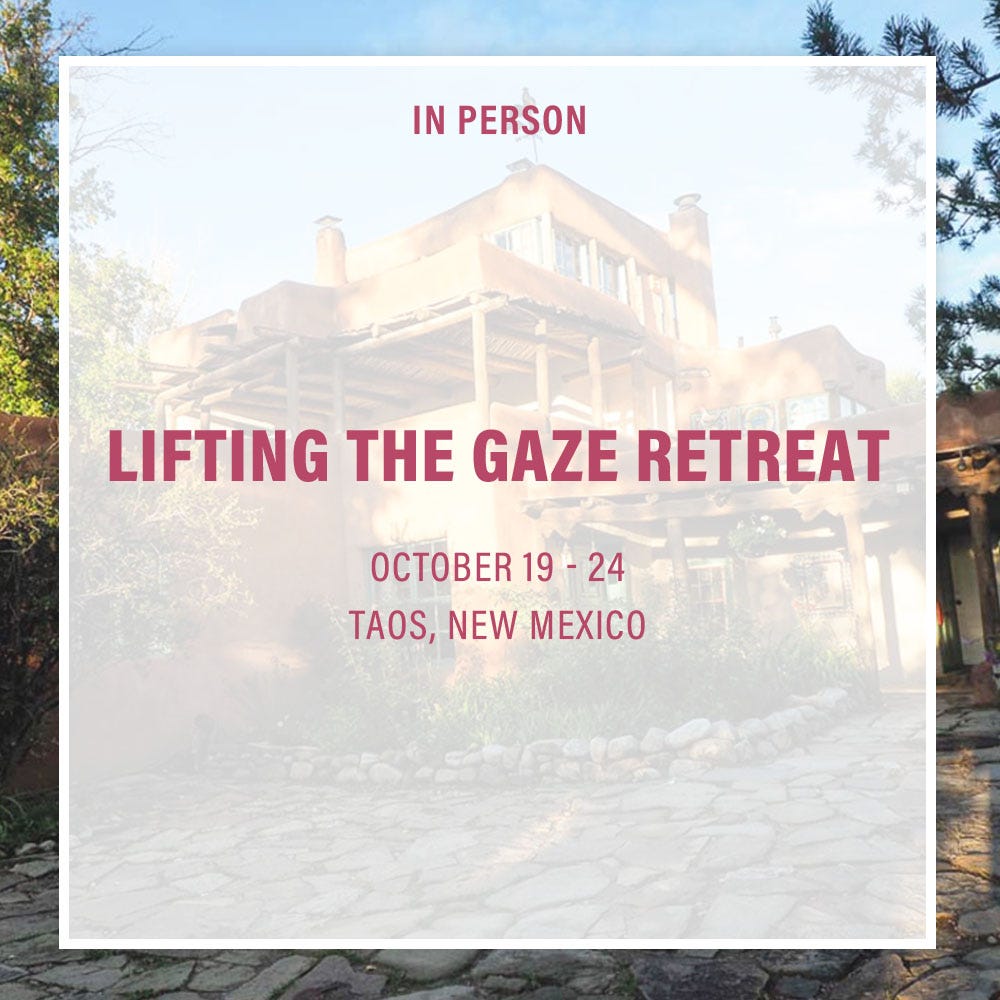
LESS THAN ONE MONTH AWAY!
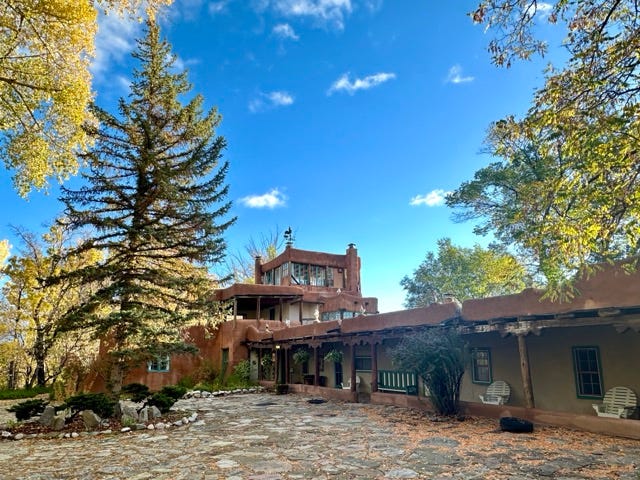
We love retreating at the Mabel Dodge Luhan House in Taos. But 2025 will be our last year there. If you are thinking about it, I say go for it! Please feel free to send me any questions or concerns—just respond to this email.
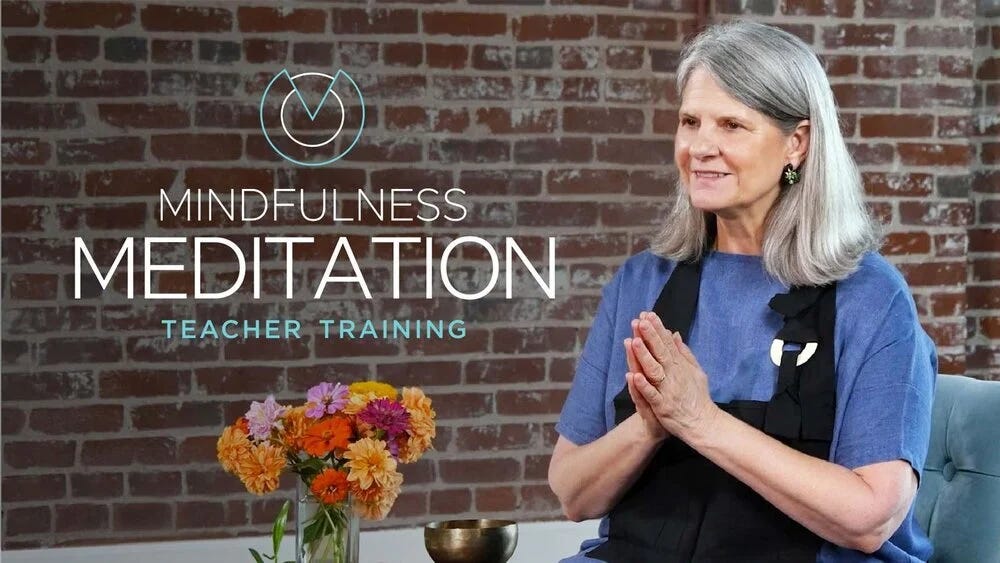
Mindfulness Meditation Teacher Training: A Self-Guided 2-Part Program is a course Cyndi Lee designed to help meditators of all levels learn a new approach to meditation or refresh and deepen their existing practice. In the second part of the course, you’ll learn how to teach meditation and listen to enriching dharma talks from Cyndi that will inspire both your practice and your teaching.
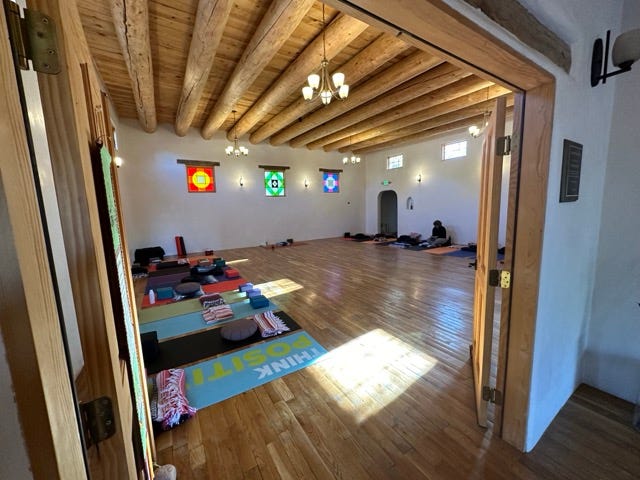
Some photos from last year’s Lifting the Gaze retreat!
At almost 98 I am still teaching Yoga. I read a part of Steven's Book...interviews of Yoga teachers to my class 2 weeks ago about you, and looked you up after that.
I have so enjoyed this email. You are wonderful! Thank you for what you shared today re your husband! Beautiful!!! Namaste, Julie Russell
Steadfast consistency is the foundation. It’s hard to articulate how meditation shows up out in the jungle of the world as it is often not a tangible thing that we can point to and say “here it is” or “this is the thing,” but it is a steady way of being that just happens in the moment. We live our lives in the middle way and when things happen, we stay the course and do what needs to be done. We live in the eye of the storm where the peace reigns. As always, this Substack speaks to me today and I thank you.